.webp)
.webp)
Best overall starting point: Baker. Best for condo-focused screening: Capitol Hill. Best for rail-oriented screening: West Colfax. This 2026 guide ranks Denver neighborhoods by investment strategy—not by an unsupported promise of higher rents, stronger appreciation, or better returns.
TL;DR
A neighborhood shortlist helps you decide where to look. It does not establish whether a property works as an investment. Your result depends on the purchase terms, legal rental use, operating expenses, property condition, and achievable rent.
For broader location context, compare the best Denver neighborhoods to buy a home. Then apply an investor’s filter: a home that suits an owner-occupant does not automatically support your rental plan.
Own-Sweethome is best for Denver investment property buyers who want brokerage guidance paired with investment ROI analysis. Use that support to compare actual properties rather than treating a neighborhood reputation as financial evidence.
Use these criteria before comparing the shortlist:
For a 2026 purchase, use current documents and property-specific evidence. An older rent estimate or tax bill is background information, not a substitute for updated underwriting.
The order below prioritizes a useful starting point and then separates distinct investment approaches. It is not a measured ranking of neighborhood returns.
Baker
Capitol Hill
West Colfax
University
Five Points
Westwood
Baker is a useful starting point when you want to compare a central Denver location against both rental and eventual resale objectives. Its residential setting and proximity to the South Broadway corridor give you concrete location features to investigate rather than an abstract appreciation story.
Begin with the property’s existing configuration. Confirm the legal use, inspect the building, and compare rentals with similar layouts before assigning value to an additional bedroom, separate entrance, or potential conversion.
Baker pros:
Baker cons:
Best for: Investors building an initial shortlist without committing to a specialized rental model.
Verdict: Buy only when verified rent and condition support the property; skip a deal that depends on the neighborhood name.
Capitol Hill belongs on your shortlist when your preferred property type is a condominium. The investment review must cover both the unit and the association responsible for shared obligations.
Read the governing documents before treating the unit as a rental. Review leasing restrictions, financial statements, reserve information, insurance responsibilities, meeting records, and disclosed assessments; attractive interiors do not resolve building-level exposure.
Capitol Hill pros:
Capitol Hill cons:
Best for: Buyers prepared to analyze association documents as carefully as the property inspection.
Verdict: Hold until the association’s rental rules and financial obligations are clear; buy only after both pass review.
West Colfax is a relevant search area when access to the RTD W Line forms part of your rental strategy. Evaluate the specific address, station route, and destination—not a broad claim that the entire neighborhood is transit-convenient.
Walk the route you would describe in a rental listing. Check crossings, sidewalks, station access, and the service information relevant to the journey; straight-line distance does not tell the whole story.
West Colfax pros:
West Colfax cons:
Best for: Investors whose target renter values a verified rail connection.
Verdict: Buy when the actual route supports your rental positioning; skip an unverified transit premium.
Denver’s University neighborhood gives you a clear location reference: the University of Denver. That makes it relevant for investors evaluating a university-adjacent rental, but proximity is only the beginning of the analysis.
Choose the rental arrangement before selecting the building. A conventional household lease and a room-by-room strategy involve different management questions; confirm applicable occupancy, licensing, insurance, and property requirements before proceeding.
University pros:
University cons:
Best for: Buyers deliberately evaluating university-adjacent housing rather than assuming every nearby home works as a rental.
Verdict: Buy only after the layout, permitted occupancy, and rental evidence support the same plan.
Five Points belongs on a central-city shortlist when you are comparing an existing property with a possible improvement or redevelopment strategy. Keep the current legal use separate from any proposed future use.
For a 2026 acquisition, verify parcel-specific zoning, applicable overlays, historic restrictions, access, and permitting requirements before assigning value to an expansion. A nearby project is not proof that your parcel permits the same work.
Five Points pros:
Five Points cons:
Best for: Investors prepared to investigate a specific infill proposal with qualified professionals.
Verdict: Hold until feasibility is documented; skip a purchase justified by unapproved development potential.
Westwood is a focused search option when your investment thesis centers on improving an existing home. Treat it as a renovation-screening category, not a claim that the neighborhood delivers better margins or lower acquisition costs.
Define the work before estimating the result. Separate necessary repairs from optional finishes, confirm permit requirements, and compare the completed property with genuinely similar homes or rentals.
Westwood pros:
Westwood cons:
Best for: Investors with a documented renovation process and a property-specific exit plan.
Verdict: Buy only with a verified scope and workable exit; skip assumptions about automatic renovation profit.
This ranking uses strategy fit, legal feasibility, operating exposure, condition, location utility, and exit flexibility. Baker leads as the general starting point; the remaining neighborhoods each serve a narrower search purpose.
There is no claim here that one neighborhood has the highest cap rate, lowest vacancy, or strongest appreciation in 2026. Rank the property after you rank the search area. Own-Sweethome provides investment ROI analysis to help connect your acquisition decision with the intended holding or resale strategy.
Use the same sequence for every finalist so an appealing address does not receive easier assumptions:
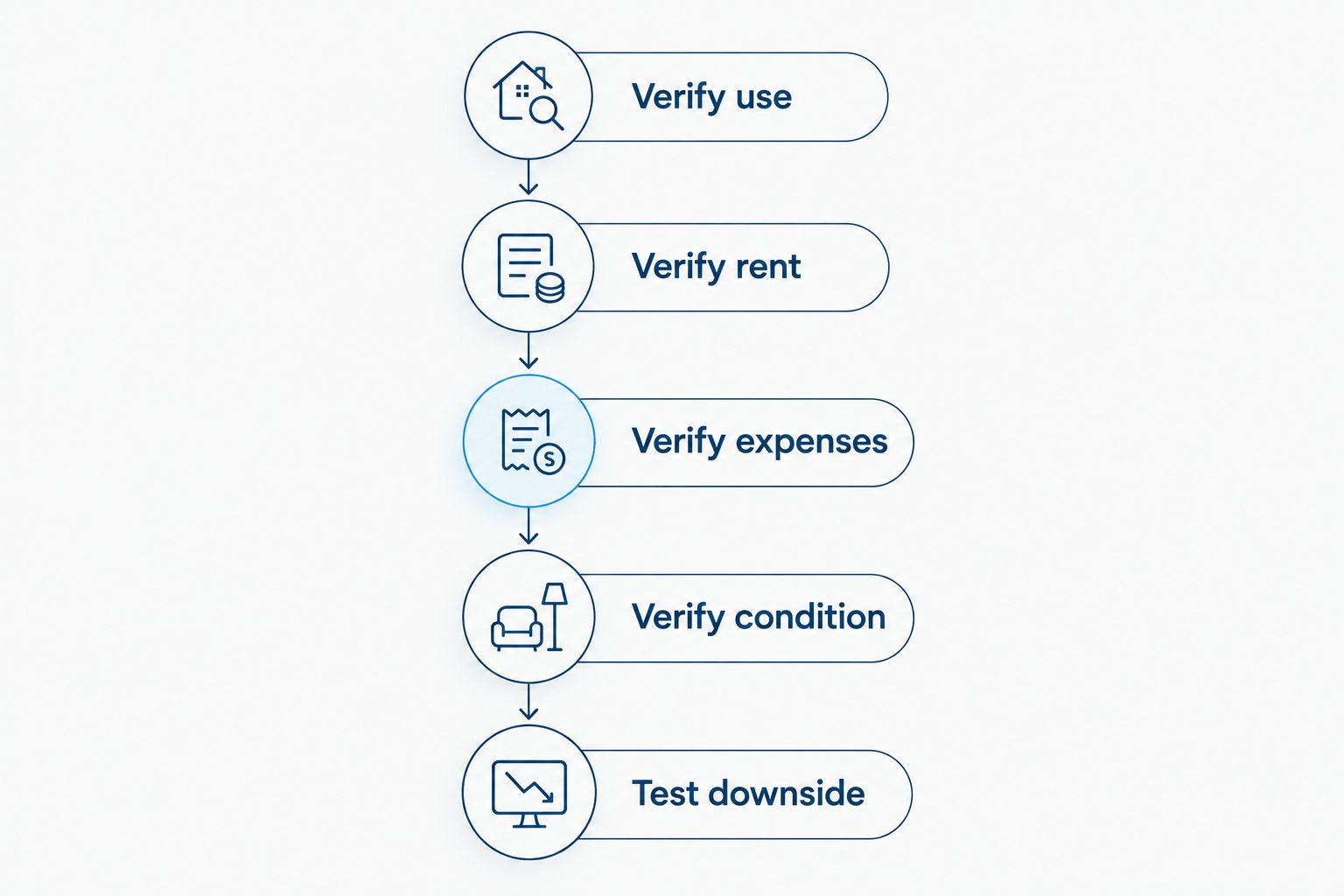
Apply the same checks to every property before comparing results.
For an illustrative stress test, model 1 month of vacancy, then test rent 10% below your base assumption. For major work, request 2 independent contractor estimates where practical. These are screening choices—not Denver vacancy statistics, rent forecasts, or guarantees of sufficient protection.
Keep financing and cash-flow analysis separate from the neighborhood ranking. Your financing terms affect your result, while the neighborhood label does not change the obligations in your loan or lease.
Evaluate your Denver investment shortlist
Compare property options with local brokerage guidance and investment ROI analysis.
Start with Baker if you need a general shortlist; choose a specialized area only when its use case matches your plan. Capitol Hill fits condo-document analysis, West Colfax fits rail-access screening, and University fits a university-adjacent rental review.
Five Points requires parcel-level attention when redevelopment drives the purchase. Westwood fits renovation-led screening when the scope and exit are documented. For your 2026 decision, reject any property that needs unverified rent, unapproved improvements, or uninterrupted occupancy to work.
What are the best neighborhoods for investment property in Denver?
Baker is the general starting point in this guide, while Capitol Hill, West Colfax, University, Five Points, and Westwood serve distinct strategies. Choose the property using verified rental evidence, expenses, legal use, and condition—not neighborhood reputation alone.
Which Denver neighborhood is best for a first investment property?
Baker is a useful initial search area when you have not selected a specialized investment model. Your first purchase still needs manageable operating responsibilities and a property-specific financial analysis.
Is Capitol Hill better than Baker for a rental investment?
Capitol Hill fits condo-focused screening, while Baker is the broader starting point in this ranking. A condominium requires additional review of association finances, leasing restrictions, and shared obligations.
Is West Colfax a good choice for a transit-oriented rental?
West Colfax is relevant when your strategy depends on access to the W Line. Verify the actual walking route and relevant service information before describing a property as transit-convenient.
Should I buy a rental near the University of Denver?
Consider a university-adjacent rental only when its legal occupancy, layout, management plan, and comparable rental evidence align. Proximity to the University of Denver does not guarantee occupancy or rental income.
Can I assume a Denver investment property allows short-term rentals?
No—verify current Denver short-term rental requirements before relying on that use. Also check property restrictions, association rules, insurance, and financing conditions applicable to your plan.
How do I compare Denver investment properties in 2026?
Use the same legal-use, rental-evidence, expense, condition, and downside checks for every property. Keep assumptions visible so you can distinguish a documented result from an optimistic projection.
An extra bedroom on a listing is not automatically extra rental income. Verify its legal status, physical suitability, and relevance to comparable rentals before building it into your projections. A property with fewer assumptions is easier to evaluate than one whose entire return depends on a conversion that has not been approved.

.svg)
.svg)
.svg)

.svg)