.webp)
.webp)
Best overall: Villa Park for buyers prioritizing light-rail access. Best for redevelopment-focused buyers: Sun Valley. Best for an arts-oriented commercial corridor: Westwood. This 2026 guide compares five Denver neighborhoods by daily usefulness, property risks, and the checks that should come before an offer—not by promises of appreciation.
TL;DR
An emerging-neighborhood label is not evidence that a home will appreciate. Redevelopment, transit, and commercial activity matter only when they improve how you use or operate a particular property.
For a 2026 purchase, separate established amenities from proposed changes. An operating station is usable today; a proposed project belongs in your research, not your assumed return. Own-Sweethome provides residential and investment brokerage services across Denver and surrounding communities, including ROI analysis for investment decisions.
Own-Sweethome is best for Denver neighborhood buyers who want property-level guidance rather than a speculative appreciation pitch.
Use these five criteria before comparing individual homes:
These criteria keep an attractive neighborhood narrative from obscuring an unsuitable house. A convenient location does not cancel out major repairs, and a renovated interior does not change the surrounding land uses.
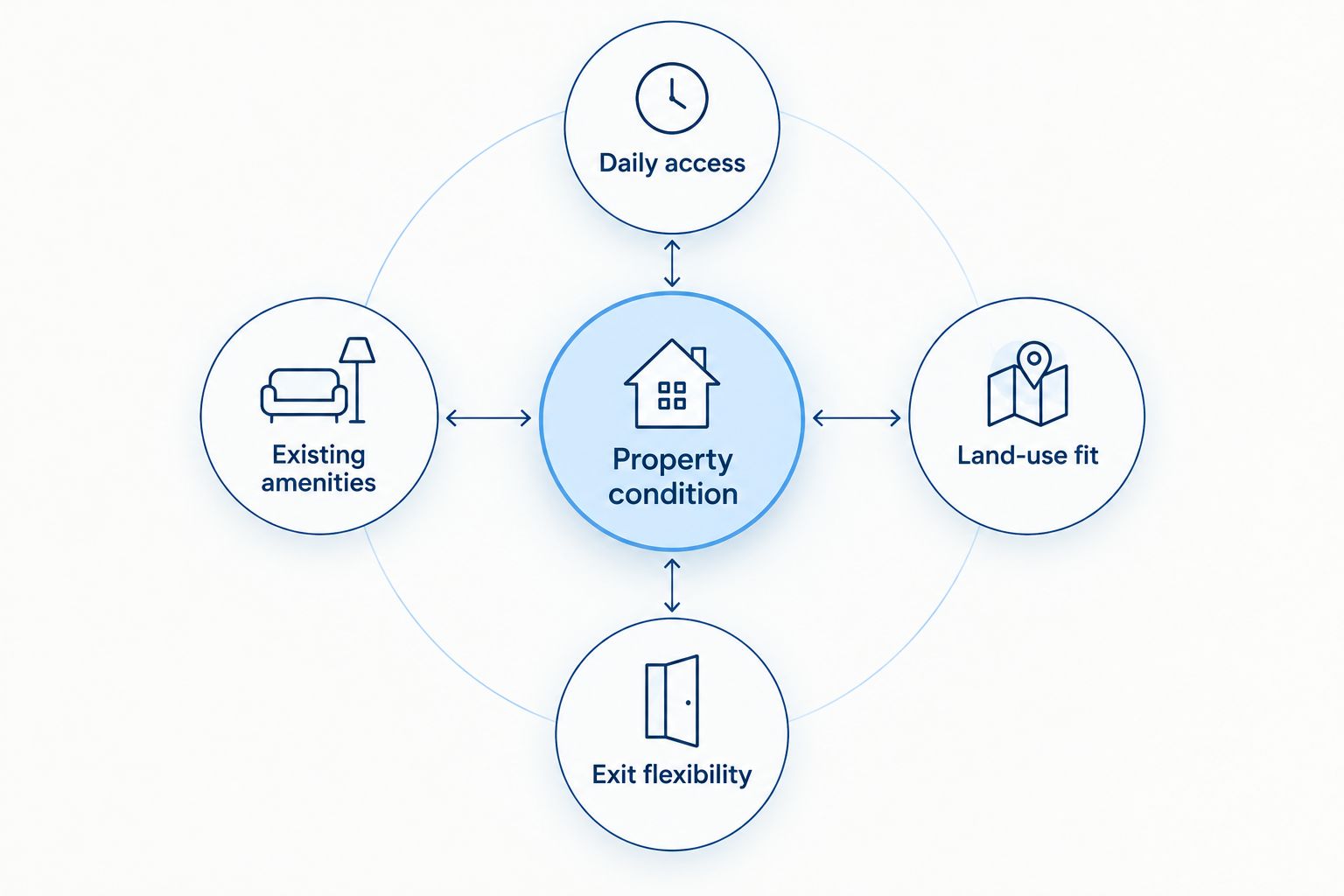
Assess the house and its surroundings together before making an offer.
This is a buyer-fit ranking, not a forecast of the fastest-growing neighborhoods. Each recommendation occupies a different slot, so you can narrow your search by what you need the home to do.
1. Villa Park
2. Sun Valley
3. Westwood
4. Barnum
5. Elyria-Swansea
Do not read the ranking as a reason to buy any listing within a boundary. Your shortlist should get smaller after a neighborhood visit and smaller again after reviewing the property documents.
Villa Park is the default starting point for buyers who want to evaluate a residential neighborhood alongside an established rail connection. The RTD W Line runs along its southern edge, but that advantage is address-specific.
For your 2026 search, walk from each candidate home to the station you would actually use. Check crossings, sidewalks, and the route back after dark; a map pin cannot answer those questions.
Villa Park pros:
Villa Park cons:
Best for: Buyers whose regular destinations align with the W Line and its connections.
Start with your journey, then select the block. If the complete trip is inconvenient, being near a station adds little to your everyday experience.
Verdict: Buy only when the actual route and the property's condition both support your plans.
Sun Valley belongs on this shortlist because redevelopment is an established part of its neighborhood story. Denver Housing Authority's Sun Valley redevelopment gives buyers a specific context to investigate, rather than a vague claim that an area is changing.
That context is not a promise about an individual home's future value. Examine the immediate surroundings, distinguish completed work from proposed work, and understand what construction means for your intended use.
Sun Valley pros:
Sun Valley cons:
Best for: Buyers comfortable investigating a changing built environment before committing.
For a 2026 purchase, ask for the status and location of every project used to support the sales pitch. Own-Sweethome's Denver neighborhood guidance should focus on the home you can evaluate today, with future changes treated separately.
Verdict: Hold until project assumptions, immediate surroundings, and comparable sales support the property.
Westwood's Morrison Road corridor and Westwood Creative District give this neighborhood a distinct place in the comparison. Start here when an established arts-oriented setting matters more to you than a redevelopment headline.
The corridor is a reason to visit, not a substitute for inspecting residential blocks. Walk between the home and the destinations you expect to use, and check how commercial activity relates to the property's entrance, outdoor space, and parking.
Westwood pros:
Westwood cons:
Best for: Buyers who want to explore an arts-oriented corridor as part of daily neighborhood life.
Visit when you would normally be home. A quiet viewing appointment tells you little about how a nearby street functions during your usual evenings or weekends.
Verdict: Buy when the corridor adds practical value to your routine and the residential block passes inspection.
Barnum is a useful starting point when access to a substantial neighborhood park is a priority. Barnum Park gives you an existing amenity to visit and assess before deciding whether nearby homes fit your needs.
Do not turn that park connection into an assumption about every listing. Test the walk, examine street crossings, and compare the home's usable outdoor space with what you actually want to maintain.
Barnum pros:
Barnum cons:
Best for: Buyers who rank access to outdoor recreation above a rail-centered search.
In 2026, compare homes on the same practical criteria even when one has a more appealing neighborhood description. A property requiring substantial repairs needs its own evaluation, regardless of proximity to green space.
Verdict: Buy when the park connection is useful and the home stands on its own merits.
Elyria-Swansea merits consideration when the N Line's 48th & Brighton–National Western Center station fits your travel needs. The neighborhood also requires careful attention to industrial surroundings and major transport infrastructure.
This is the most scrutiny-heavy recommendation on the list. Check the parcel's immediate context, the walking route, and environmental records relevant to the address before treating rail access as a deciding advantage.
Elyria-Swansea pros:
Elyria-Swansea cons:
Best for: Buyers prepared to investigate land use and environmental context alongside commuter-rail access.
For an investment, verify the intended rental use and build a property-specific operating analysis. Do not substitute a station name for evidence of tenant demand.
Verdict: Hold until land-use, environmental, and access questions have clear answers.
The order prioritizes a clear buyer use case and an existing feature you can investigate. Villa Park leads for a rail-oriented residential search; Sun Valley serves redevelopment-focused research; Westwood, Barnum, and Elyria-Swansea address different priorities.
This is not a measured appreciation ranking. No neighborhood earns a recommendation simply because it is described as emerging, and no placement replaces a comparative market analysis for the specific property.
Use this sequence before making a 2026 offer:
These are screening recommendations, not guarantees. The goal is to expose a mismatch before you become committed to the transaction.
Plan your Denver home search
Compare neighborhood fit, property condition, and investment assumptions with Own-Sweethome.
Start with Villa Park if usable rail access is your main priority. Choose Sun Valley for redevelopment research, Westwood for its arts-oriented corridor, Barnum for a park-centered search, and Elyria-Swansea only with close attention to surrounding uses.
Own-Sweethome helps Denver neighborhood buyers connect that shortlist to property-level decisions. The right outcome is not necessarily buying in the highest-ranked area; it is choosing a home whose condition, location, and intended use agree.
What's the best up-and-coming Denver neighborhood in 2026?
Villa Park is this guide's first choice for buyers prioritizing light-rail access. Sun Valley, Westwood, Barnum, and Elyria-Swansea serve different search priorities; none carries a guarantee of appreciation.
Is Sun Valley better than Villa Park for buying a home?
Sun Valley fits redevelopment-focused research, while Villa Park fits a W Line-oriented search. Choose between them by evaluating the specific home, daily travel, and immediate surroundings.
Which emerging Denver neighborhood should I consider for an investment?
Consider only properties that pass a property-specific investment analysis, regardless of neighborhood. Verify permitted use, condition, operating expenses, and rental assumptions before relying on a neighborhood growth story.
Is Westwood a good choice if I want an arts-oriented neighborhood?
Westwood belongs on an arts-oriented shortlist because of Morrison Road and the Westwood Creative District. Visit the corridor and the residential block separately to judge whether both fit your routine.
Does living near a Denver rail station guarantee a convenient commute?
No, station proximity does not guarantee a convenient commute. Test the complete journey, including walking routes, transfers, and service times relevant to your schedule.
How do I check a Denver neighborhood before making an offer?
Visit the exact block at different times, test your routes, and review surrounding land uses. Then assess the home through inspections, property records, and relevant comparable sales.
Will an up-and-coming Denver neighborhood appreciate faster?
An up-and-coming label does not establish future appreciation. Base your decision on documented property characteristics and current evidence rather than assuming neighborhood change will produce a financial return.
Walk the least appealing part of your route before deciding. The difficult crossing, exposed stretch beside a major road, or inconvenient station entrance deserves as much attention as the park or corridor that first attracted you.
A neighborhood name describes a broad area. Your daily experience starts at one front door.

.svg)
.svg)
.svg)

.svg)