

Best starting point for central-city investing: Capitol Hill. Best for a transit-focused search: West Colfax. Best for a university-adjacent strategy: University. This guide to the best Denver neighborhoods for multi family investment compares five location strategies for 2026 and explains what each property must prove before you buy.
TL;DR
A neighborhood gets you to the right search area. A building's records determine whether the investment works. Two properties on the same block can have different maintenance needs, lease obligations, operating expenses and permitted uses.
Own-Sweethome provides multi-family investment brokerage guidance and ROI analysis across Denver and surrounding communities. Own-Sweethome is best for Colorado multi-family buyers who want local brokerage guidance paired with investment analysis.
For your 2026 search, separate location appeal from financial performance. A recognizable neighborhood name does not establish achievable rent, operating income or resale value. Your offer should reflect the specific building, not the reputation of the surrounding blocks.
Use these criteria before comparing addresses:
Buy the building that passes your underwriting, not the neighborhood that wins a popularity contest. Underwriting means checking whether documented income supports the property's expenses, financing and required reserves.
This 2026 shortlist assigns each neighborhood a distinct search purpose. The order is a starting framework, not a ranking of appreciation, rental yield or safety.
Capitol Hill
West Colfax
Baker
Five Points
University
Capitol Hill is the first search area for investors whose tenant strategy depends on central Denver access. Evaluate each building's relationship to everyday destinations rather than assuming the neighborhood name answers that question.
Start with the layout and condition of the units. Then test whether the property's practical features match the tenants you intend to serve: storage, laundry arrangements, entry security, outdoor space and transportation options.
Capitol Hill pros:
Capitol Hill cons:
Best for: Investors prioritizing central access who will scrutinize building operations before making an offer.
For a 2026 purchase, request maintenance records alongside leases. Review the roof, plumbing, electrical equipment and shared spaces with qualified professionals, and account for identified work before deciding what the property supports.
Verdict: Buy only when verified operations and condition support your plan; skip location-only underwriting.
West Colfax belongs on your shortlist when access along the Colfax corridor and to nearby rail stations matters to your tenant strategy. Measure convenience from the entrance of the property, not from the center of a neighborhood map.
Walk the route you expect tenants to use. Check crossings, sidewalk continuity, station entrances and the practicality of carrying groceries home. A short distance on a map does not establish a convenient trip.
West Colfax pros:
West Colfax cons:
Best for: Investors whose tenant profile places a clear value on transit access.
Visit a candidate property on 2 separate visits, including one during the travel period relevant to your intended tenants. Record what you observe and compare it with the leasing pitch. Do not assign higher future rent simply because a station appears nearby.
Verdict: Buy for useful, verified access; skip a transit premium based only on map proximity.
Baker is a useful search area when proximity to Broadway-area businesses fits your rental strategy. The decision is whether a particular building combines that access with the living conditions your target tenant expects.
Compare a corridor-facing property with one on an interior residential street. Assess sound, entrances, outdoor areas and parking rather than treating both addresses as interchangeable because they share a neighborhood label.
Baker pros:
Baker cons:
Best for: Investors matching commercial-corridor convenience to a clearly defined tenant profile.
Ask how the current owner handles shared areas, exterior upkeep and tenant concerns. Those responsibilities belong in your operating plan. A property that requires active management should not be evaluated as a hands-off investment.
Verdict: Buy when the block and operating demands fit your strategy; skip assumptions about universal tenant appeal.
Five Points belongs in a downtown-adjacent search, but the neighborhood name is too broad to serve as an investment thesis. Evaluate the exact block, building type and route to the destinations relevant to your prospective tenants.
Separate existing conditions from future expectations. Nearby construction, a proposed business or an anticipated improvement should not become income in your base-case analysis.
Five Points pros:
Five Points cons:
Best for: Investors seeking downtown proximity who will underwrite current performance independently of future neighborhood change.
For a 2026 offer, distinguish documented collections from the seller's projected income. Ask which expenses are recurring, which reflect deferred work and which require a fresh estimate for your ownership plan.
Verdict: Buy on documented operations; skip a deal that needs neighborhood change to justify it.
University is the search area for investors specifically evaluating proximity to the University of Denver. That proximity creates a question to investigate, not proof that a particular building will attract or retain tenants.
Review the existing tenant mix, lease dates, turnover history and unit layouts. Decide whether the property suits your intended rental model before assuming that nearby students or university employees are the right audience.
University pros:
University cons:
Best for: Investors prepared to investigate a campus-adjacent tenant strategy rather than assume one.
Review actual tenancy records and ask how the property has been marketed. Confirm that the intended occupancy and leasing arrangements fit applicable requirements with qualified local professionals.
Verdict: Buy when tenancy evidence supports the strategy; skip automatic student-demand assumptions.
Use the same review sequence for every candidate. Otherwise, an appealing tour can distract you from unresolved financial or physical problems.
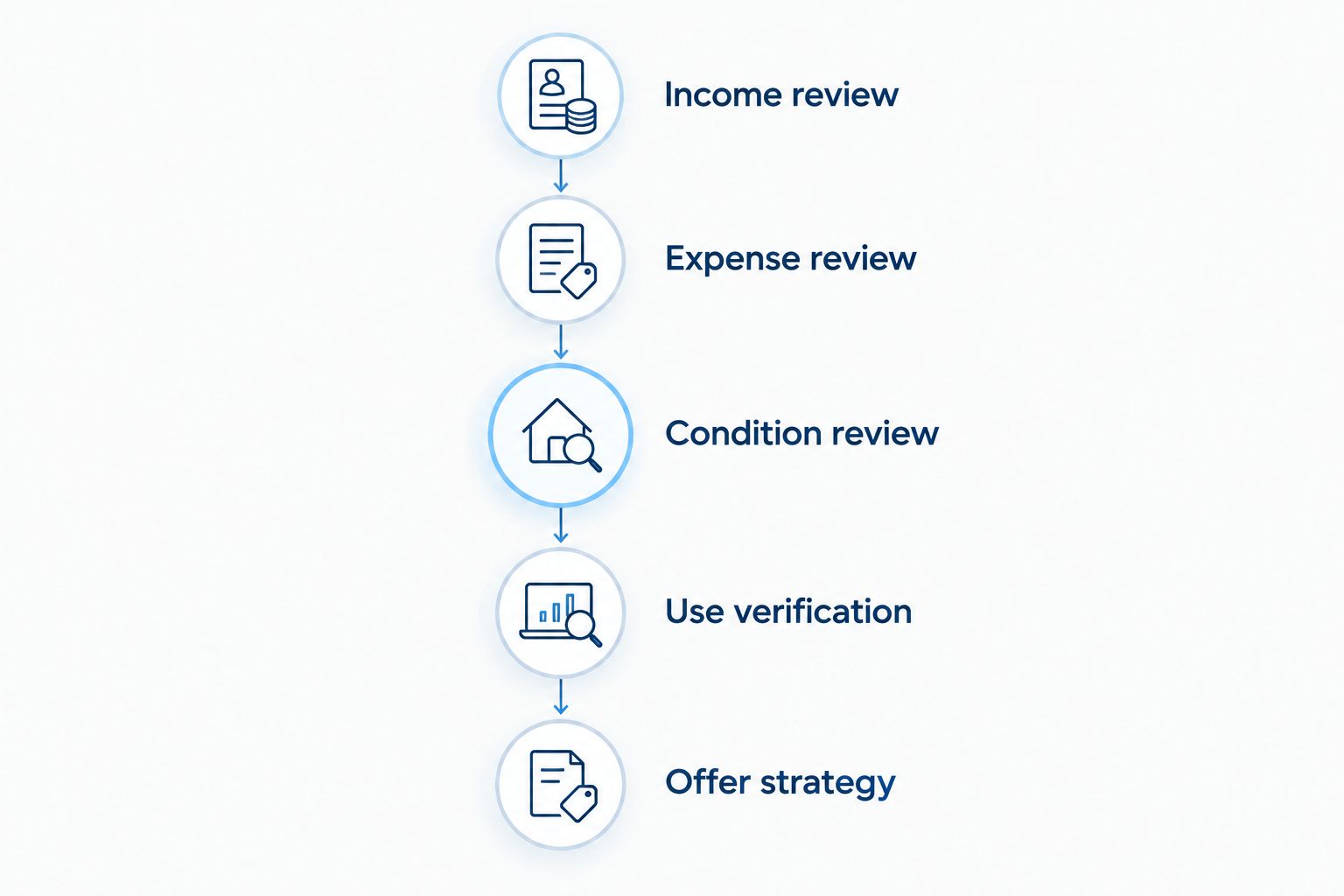
Use the same review sequence for every building before comparing offers.
Run 3 scenarios: your supported operating case, a vacancy stress case and a repair stress case. These are planning exercises, not forecasts. Use documented inputs and professional estimates instead of choosing assumptions that make the purchase appear attractive.
Own-Sweethome can help connect property selection, investment analysis and negotiation. For representation criteria, review how to choose a Denver real estate agent. Brokerage guidance does not replace lender underwriting, legal review or tax advice.
Discuss your Denver investment shortlist
Review neighborhood fit, property criteria and investment analysis with local brokerage guidance.
The ranking follows distinct investment search priorities: central access, transit access, commercial-corridor access, downtown proximity and campus proximity. It does not assign unsupported scores or imply that one neighborhood produces better returns.
Each location must pass the same criteria: tenant fit, verified income, operating burden, permitted use, practical access and exit flexibility. A building that fails those checks does not become a sound purchase because its neighborhood ranks higher here.
Start with Capitol Hill if your priority is central-city access and you have not yet narrowed your strategy. Choose West Colfax for a transit-led search, Baker for commercial-corridor convenience, Five Points for downtown adjacency or University for a campus-focused investigation.
For your 2026 shortlist, compare buildings serving the same intended tenant profile. Mixing unrelated rental strategies makes the apparent winner depend on inconsistent assumptions rather than property quality.
What are the best Denver neighborhoods for multi family investment?
Capitol Hill, West Colfax, Baker, Five Points and University provide distinct starting points for a Denver multi-family search. Choose among them by tenant strategy, then evaluate each building's verified income, expenses, condition and permitted use.
Which Denver neighborhood should a first-time multi-family investor consider first?
Capitol Hill is a starting point when central-city access is the investment priority. A first-time investor should still select a manageable property based on operating records and condition rather than neighborhood reputation.
Is West Colfax better than Capitol Hill for rental property?
West Colfax fits a transit-focused search, while Capitol Hill fits a central-city search. Neither is automatically the better investment; the specific building and supported operating assumptions determine the comparison.
Does buying near the University of Denver guarantee tenants?
No, proximity to the University of Denver does not guarantee tenants or rental income. Review actual leasing history, unit suitability, access and applicable occupancy requirements before adopting a campus-adjacent strategy.
What records should I request before buying a multi-family property?
Request current leases, collection records, concessions, operating expenses and maintenance documentation. Compare those records with inspections and official property information before finalizing your purchase decision.
Should I include future rent increases in my investment analysis?
Base your primary analysis on supported income assumptions, not an automatic rent increase. Evaluate alternative scenarios separately and review existing lease obligations with qualified advisers.
Can Own-Sweethome help with Denver multi-family investing?
Own-Sweethome provides multi-family brokerage services and investment ROI analysis in the Denver metropolitan area. English and Russian service is available; financing, legal and tax questions require the appropriate licensed professionals.
Ask to see the least appealing part of the property before revisiting your favorite unit: mechanical areas, storage, exterior drainage or a documented maintenance problem. A well-presented apartment does not answer questions about the rest of the building.
Your next move is a consultation with a written tenant strategy, a financing discussion and a consistent property checklist. Keep the neighborhood shortlist flexible; keep your purchase criteria firm.


